There is a particular disappointment that comes from standing in a sunflower field at the wrong moment: the light is flat, the ground is baking, and the flowers you drove an hour to see are all turned away from you. Most first visits go slightly wrong in the same handful of ways. None of them are serious, and all of them are easy to avoid once you know what to look for.
The classic timing mistake: arriving at midday
Sunflowers are not performing for anyone. Young plants turn to follow the sun across the sky, and once the heads mature and grow heavy they tend to settle facing east. So a field at two in the afternoon in July can look like a wall of green stems with the flowers pointing the other way — accurate, but photographically flat and brutally hot.
Early morning is the better half of the day. The light is soft, the bees are still slow, and the heads are where you want them. Late afternoon into early evening is the other good window: warm side light, cooler air, and enough time to wander without watching the clock.
The second half of this mistake is cutting it too fine. People arrive twenty minutes before the gate closes, park badly, hurry through the nearest row and leave without ever seeing the far side of the field. Give yourself at least an hour. If you are travelling any distance, check the opening hours on the day itself rather than the day before.
Underestimating the heat
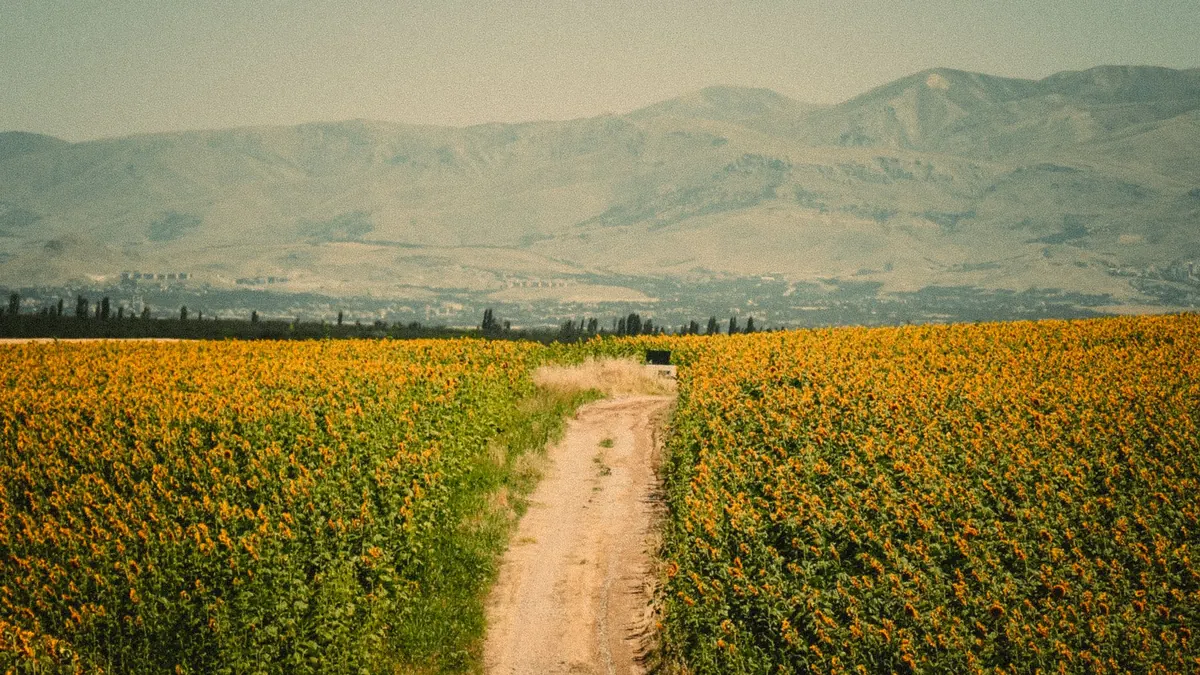
An open sunflower field is not a garden. There is no shade, the soil throws heat back at you, and the air between the stems sits still. Visitors dressed for a town afternoon often turn back within fifteen minutes, which is a shame when a hat and a bottle of water would have solved it.
Take more water than you think you need — a bottle per person for a short visit, more if you plan to linger. Wear a hat and sunglasses, use sunscreen on your neck and ears as well as your face, and reapply after an hour of walking in the sun. If you are bringing children or older relatives, plan the visit around the cooler hours rather than expecting them to tough it out.
Watch for the early signs of overheating in yourself and in whoever came with you: a headache, dizziness, sudden tiredness, feeling sick, or the strange sensation of having stopped sweating. If that happens, get out of the sun, sit down, drink water and ask for help at the farm. If you have a heart condition, are pregnant, or take medication that changes how you handle heat, speak to your doctor before planning a long, hot visit.
Wearing the wrong shoes, and the wrong everything else
Flip-flops, smooth-soled sandals, brand-new white trainers. Field ground is not a lawn: dry clods, irrigation ruts, burrs and, after harvest, sharp stubble. Closed shoes with some grip and a pair of socks are the difference between a pleasant hour and a slow limp back to the car.
Long trousers help if your skin is sensitive to leaves and stalks, and a loose long-sleeved shirt is often cooler in direct sun than bare arms. Bring a bag that closes properly so you are not chasing a phone through the rows, and leave loose scarves and dangling jewellery at home — stems and seed heads catch on them.
Getting the picking rules wrong
A sunflower head is the harvest. Each one is a seed crop, sold or pressed, and a field that has been "just picked a little" by a hundred visitors is a field with a hole in its income. This is why the rules exist, and why they are stricter than they look.
Ask before you touch anything. Farms that allow picking usually have a marked row, a limit on stems per visitor, and a price per stem or bunch. Stay in the row you are pointed to. Cut rather than pull: a clean cut at an angle with secateurs or a sharp knife damages the plant far less than a torn, wrestled stalk, and it gives you a stem that will actually stand up in a vase. Take only what you intend to carry home.
Two smaller points that come up more often than you would expect: do not eat seeds straight from the field, and do not let children play hide-and-seek between the stems. Plants break, and the bees are working.
Photo etiquette mistakes that irritate everyone
Almost nobody minds being in a field with people taking pictures. What people mind is being treated as an obstacle in someone else's shoot.
- Planting yourself in a row while a queue forms. Take the shot, then step out and let the next person in.
- Lying down in the crop or sitting on the plants. A flattened patch stays flattened for the rest of the season.
- Props that leave residue. Confetti, glitter, coloured smoke and flour all end up in the soil and on the flowers. If you would not want it in your own vegetable patch, leave it in the car.
- Picking a flower as a prop and abandoning it. If you cut it, pay for it and take it home.
- Flying a drone without asking. Ask first; many farms restrict them for safety and for the comfort of other visitors.
- Blocking the access track while you "just jump out for a minute". Tractors and irrigation do not wait.
- Ignoring the people who work there. If someone asks you to move, move. It is usually about machinery, irrigation or a hazard you cannot see from where you are standing.
Overlooking the small practical things
Dogs are often not allowed in the fields, even where they are welcome in the car park, so check before you set out. Bring a little cash in case the card reader is playing up, and book ahead if the farm asks you to at weekends. Take your rubbish with you, including the water bottle you finished at the gate. A field that stays clean is a field that keeps opening to visitors.
A simple plan for a good visit
- Check the opening hours and whether you need to book, on the day.
- Arrive early in the morning or in the last couple of hours before closing.
- Closed shoes, hat, water, sunscreen. Leave the props and the drone behind.
- Ask about picking before you touch a single stem.
- Take your photos, take your flowers and your rubbish, and leave the rows as you found them.
Do those five things and the visit takes care of itself. You will spend your time looking at the field rather than managing it — which is, after all, the point of coming out here.
Photo: yunszyveli / Pexels