Two bottles sit on most kitchen counters: a tall one of pale gold sunflower oil and a smaller, darker one of olive oil. Most of us reach for whichever is closer. That works fine until you try to sear a steak in a finishing oil, or dress a summer tomato with something that tastes of almost nothing. The two oils are not rivals. They are tools with different strengths, and once you know where each one belongs, cooking gets simpler and the shopping list gets shorter.
What Is Actually in the Bottle
Sunflower oil is pressed from seeds. Most of what you find on a supermarket shelf is refined: the seeds are pressed, the oil is filtered and heated, and the result is a clean, pale, almost tasteless fat with a high tolerance for heat. Cold-pressed sunflower oil is a different product entirely. It is extracted mechanically at low temperature, so it keeps a deeper colour, a faint toasted-seed aroma, and a shorter temper at the stove.
Olive oil is pressed from fruit, not seeds. Extra virgin olive oil comes from cold extraction with no refining, which is why it carries the flavour of the grove: green grass, artichoke, almond, sometimes a peppery catch at the back of the throat. Ordinary "olive oil" is usually a blend of refined oil and a little virgin oil. Bottles marked light or mild describe flavour, not calories.
Why the difference shows up at the stove
Refining removes the compounds that burn easily, so refined oils tolerate higher heat. Unrefined oils keep those compounds, which is exactly what makes them taste good and exactly why they are less forgiving in a hot pan. Neither is better. They are built for different jobs.
Smoke Point: A Useful Marker, Not a Law
Smoke point is the temperature at which an oil starts to break down visibly and give off acrid fumes. Roughly speaking, refined sunflower oil sits in the region of 225–230°C, cold-pressed sunflower oil much lower, around 160–180°C, and extra virgin olive oil somewhere between 190 and 210°C depending on freshness and quality. Treat those numbers as markers rather than fixed rules. A fresh, well-handled oil behaves better than an old one, and a crowded pan drops the temperature fast.
What matters more than the headline figure is how long the oil sits at heat and whether you reuse it. A thin film of extra virgin olive oil in a hot pan for forty seconds is not the same as a chip fryer running all afternoon. If you see wisps of smoke, the pan is too hot — pull it off the heat, let it settle, and start again. Oil that has smoked tastes bitter, and no amount of seasoning hides it.
Flavor: Where the Choice Makes Itself
Sunflower oil is neutral, and that is its selling point. In a carrot cake, a tray of roast potatoes, or a stir-fry with ginger and chilli, you want the fat to carry heat and texture without arguing with anything. Cold-pressed sunflower oil adds a gentle nutty note that works well in dressings and drizzled over roasted vegetables, but it is still a quiet flavour.
Olive oil is not quiet. A good extra virgin oil is a seasoning in its own right, and using it where a recipe wants neutrality can flatten a dish. It belongs on things that can stand up to it: ripe tomatoes, warm bread, white beans, grilled fish, a bowl of lentils. Save the peppery, expensive bottle for the table and use something plainer for the pan.
Cost: Paying for Flavour or for Volume
Sunflower oil generally costs less per litre than extra virgin olive oil, and that gap is widest at the quality end. Olive oil is a low-yield fruit crop with a short harvest window; sunflower is a seed crop with a longer shelf life before pressing. Prices for both move with the harvest, so it is worth checking the label for origin and pressing date rather than assuming the most expensive bottle is the best one for your kitchen.
A practical split works for most households: one affordable neutral oil for frying, baking, and everyday cooking, and one smaller bottle of good olive oil for finishing. Deep-frying in the expensive stuff is a waste of money and of flavour. If you are choosing oils for a specific dietary reason, a doctor or registered dietitian is the right person to ask rather than a bottle label.
Matching the Oil to the Job
This is the part that saves the most trouble in a real kitchen. Work backwards from the heat and the flavour you want.
- Deep frying: refined sunflower oil. It is neutral, cheap enough to fill a pan, and holds a steady high temperature.
- Shallow frying and searing: either works. Refined sunflower gives you clean flavour; olive oil gives you a savoury edge, especially with vegetables and fish.
- Oven roasting: sunflower for high heat and neutral results, olive oil for anything Mediterranean where the flavour is part of the dish.
- Baking: sunflower, almost always. Cakes and biscuits want a fat that disappears into the crumb.
- Salad dressings: olive oil for character, cold-pressed sunflower when you want a delicate base that lets vinegar or citrus lead.
- Finishing a plate: extra virgin olive oil, added off the heat. Warmth destroys the aromatics you paid for.
- Marinades: olive oil for meat and vegetables with herbs; sunflower for anything with strong spices.
- Pesto and cold sauces: olive oil is traditional, though a mild cold-pressed sunflower oil makes a softer, greener version.
A quick technique that applies to both
- Heat the dry pan first, then add the oil and swirl it once.
- Add the food within a few seconds so the oil never sits alone at full heat.
- Keep the pan below the point where you see smoke, and add oil in small amounts rather than flooding the base.
Storage and Shelf Life
Both oils are vulnerable to light, heat, and air. Keep bottles in a dark cupboard away from the hob, screw the cap on properly, and buy sizes you will finish. A three-litre tin of olive oil opened in spring and still half full the following winter will taste flat and slightly waxy. Sunflower oil keeps longer, but it is not immortal — refined oil is good for roughly a year from pressing, cold-pressed oil closer to six months once opened.
Your nose is the best test. Pour a spoonful into a glass, warm it in your hand, and smell. Fresh oil smells of seeds or fruit. Stale oil smells like old nuts, crayons, or a dusty cupboard. If it does, it will not improve in the pan.
A Simple Two-Bottle System
Buy one large bottle of refined sunflower oil for heat and volume: frying, roasting, baking, weeknight sautéing. Buy one smaller bottle of extra virgin olive oil that you actually enjoy the taste of, and use it raw or barely warm — over tomatoes, on bread, at the end of a soup, across a plate of grilled vegetables. Keep both in the dark, replace them when they smell tired, and stop treating the choice as a loyalty test. The right oil is the one that suits what is in the pan.
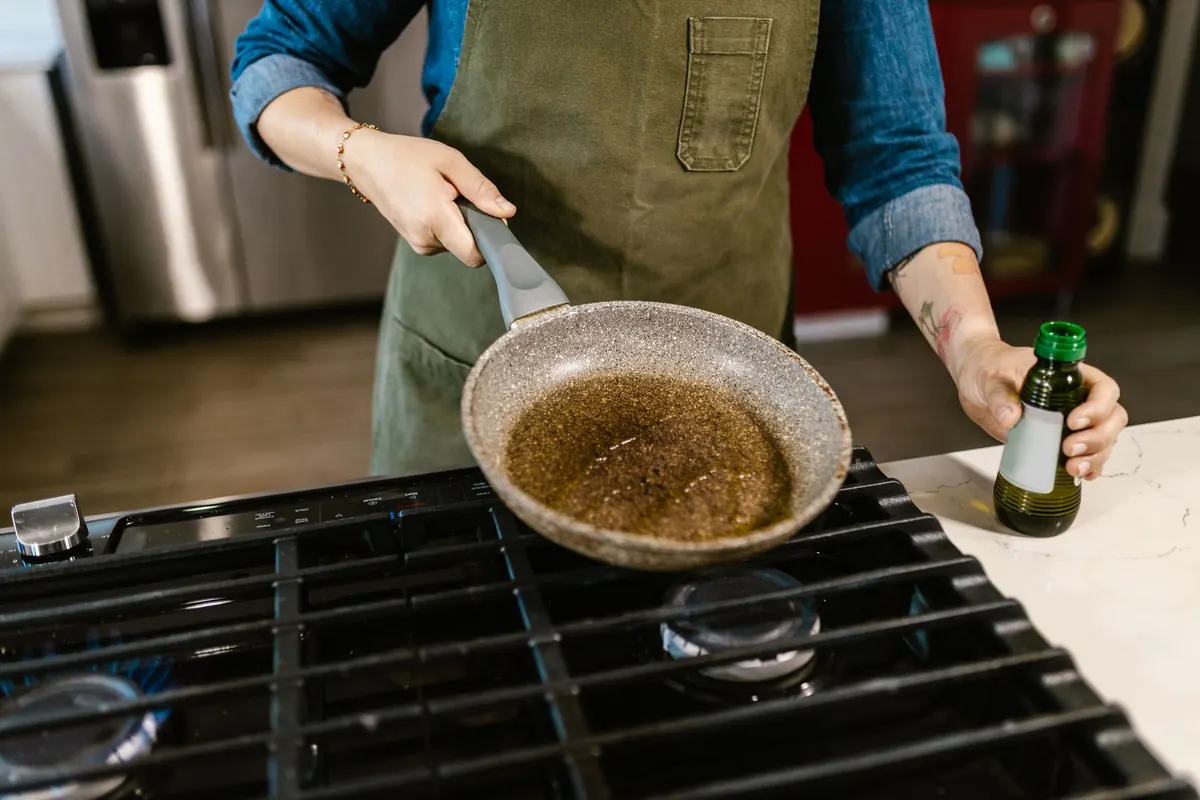
Photo: RDNE Stock project / Pexels