Sunflowers look effortless when they are standing shoulder-high in August, but a good patch begins long before that first yellow petal opens. The trick is to work with the season instead of fighting it: start a few seeds indoors where your growing season is short, sow directly where it is long, and give tall varieties the space and support they need before they need it. What follows is a first-year calendar, organized by month and adjusted to your last frost date. If your spring arrives late or early, shift the indoor and outdoor sowing dates with it. The plants will not check the calendar, but they do respond to soil temperature, light, and water.
Before You Sow: Choose a Variety and a Sunny Spot
Sunflowers are not fussy about soil, but they do insist on sun. Choose a spot that receives at least six hours of direct light, with eight or more being better. The soil should drain after rain rather than hold a puddle. If your garden is windy, plan a sheltered edge or be ready to stake; a tall sunflower in full flower can act like a sail. Prepare the bed by clearing weeds and loosening the top few inches of soil. You do not need a rich mix. In fact, too much nitrogen encourages leafy growth at the expense of flowers.
Before ordering seed, decide what kind of patch you want:
- Dwarf varieties for borders, containers, and windy sites; they need less staking.
- Medium varieties for cut flowers and mixed beds; many branch and produce several heads.
- Tall single-stem varieties for a back row or a dramatic screen; these need the most spacing and support.
Late Winter to Early Spring: Start Seeds Indoors
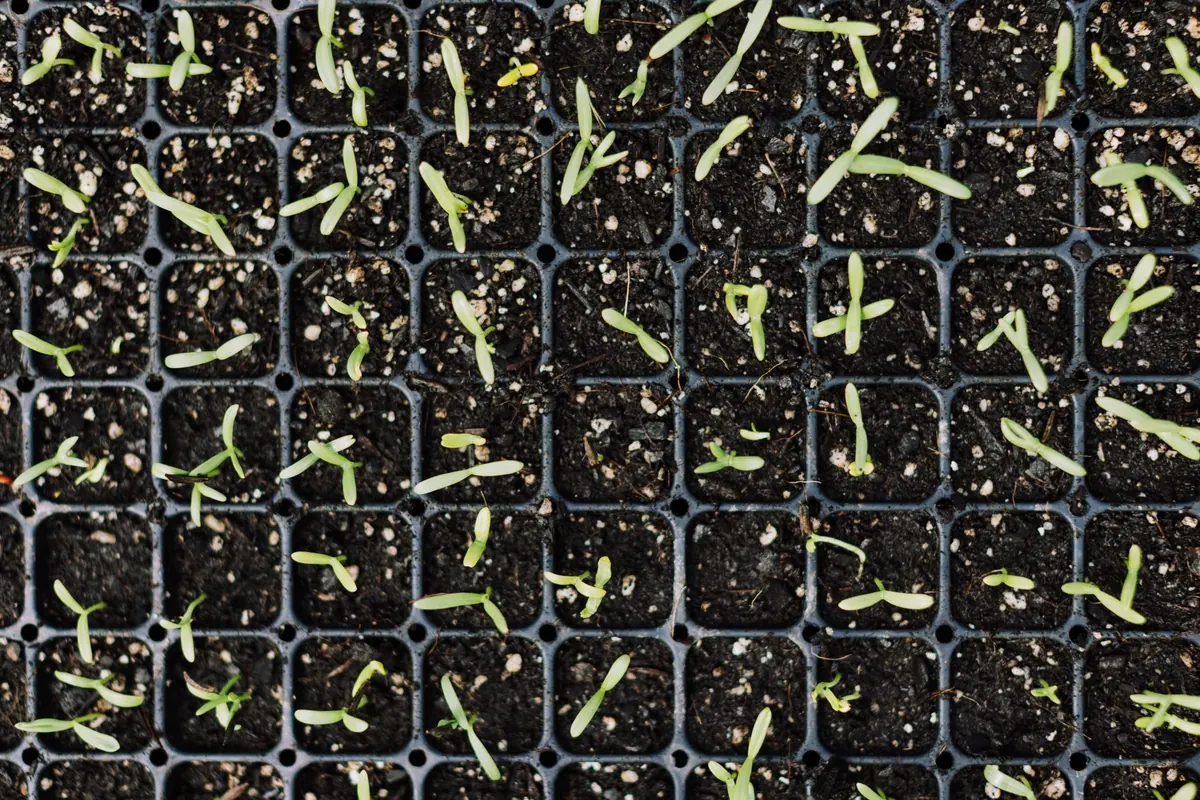
Sunflowers have taproots and resent being disturbed, so indoor sowing is best for short seasons and for varieties you want to get ahead. Start seed about three to four weeks before your last expected frost, not earlier. A sunflower that outgrows its pot before the soil warms is harder to transplant than one that is still sturdy and compact.
Sowing indoors, step by step
- Fill deep cell trays or 4-inch pots with a light, free-draining seed mix. Sunflowers need room for that taproot; shallow trays are a poor fit.
- Poke a hole about an inch deep. Drop in one seed, cover, and firm gently.
- Water from below or with a soft spray until the mix is moist but not soggy.
- Keep pots warm, around 65–75°F (18–24°C), in bright light. A windowsill that is warm but dim produces leggy seedlings; a grow light or a very sunny spot is better.
- Watch for germination in roughly one to two weeks. Remove any covering as soon as the first green hook appears.
- Thin to one seedling per pot if two sprout. Do not pull; snip the weaker one at soil level.
April to May: Harden Off and Transplant
The month names here are a guide. Transplant when the soil has warmed to about 50°F and all danger of frost has passed. In cool climates that may be late May; in mild ones, April. Harden seedlings off over seven to ten days by moving pots outdoors for increasing periods, starting in shade and gradually exposing them to sun and wind. Plant at the same depth as they grew in the pot, water deeply, and protect the young plants from slugs for the first week or two.
Spacing matters more than many first-time growers expect. Crowded sunflowers compete for light and water, and tall types become top-heavy:
- Dwarf: 12–18 inches apart.
- Medium: 18–24 inches apart.
- Tall: 24–36 inches apart, with the tallest at the back or along a fence.
May to June: Direct Sowing and Early Care
Where summers are long and warm, direct sowing is simpler and often produces stronger plants. Wait until the soil is 50°F and frost risk has passed. Sow seed one inch deep, about six inches apart, then thin to final spacing when seedlings are a few inches tall. Thin by snipping, not yanking, to avoid disturbing neighboring roots. For a longer display, sow a small batch every two to three weeks through early summer.
Keep the seedbed moist until seedlings are up; after that, water less often but more deeply. A light mulch helps hold moisture and keeps mud from splashing onto leaves. Watch for slugs and snails in damp weather; hand-picking in the evening is often enough in a small patch. If birds scratch up newly sown seed, a row cover or a few crossed twigs over the soil can discourage them without blocking the sun.
June to July: Watering, Feeding, and Staking
Once plants are growing, sunflowers tolerate dry spells better than soggy soil. Water deeply about once a week, aiming for roughly an inch of moisture, and let the top inch or two dry out between waterings. In hot, sandy soil you may need to water twice a week; in heavy clay, less. Water at the base in the morning when possible, so leaves dry before evening. Avoid overhead watering, which can encourage leaf spots.
Feed sparingly. If plants look pale or the soil is poor, a balanced liquid feed once or twice early in the season is enough. Too much nitrogen gives you a tall, floppy plant with fewer flowers.
Staking tall varieties
Put stakes in at planting time or when plants are knee-high, before the roots fill the bed. A single sturdy stake per tall sunflower is usually sufficient. Tie the stem loosely with soft twine or fabric in a figure-eight, leaving room for the stem to move. Check ties every few weeks and loosen them as the plant thickens. In exposed sites, plant a row of tall varieties behind a shorter hedge or use two stakes and a cross-tie for extra support. Branching varieties may need less staking, but heavy flower heads can still pull stems sideways after rain.
July to September: Flowers, Pests, and Seed Heads
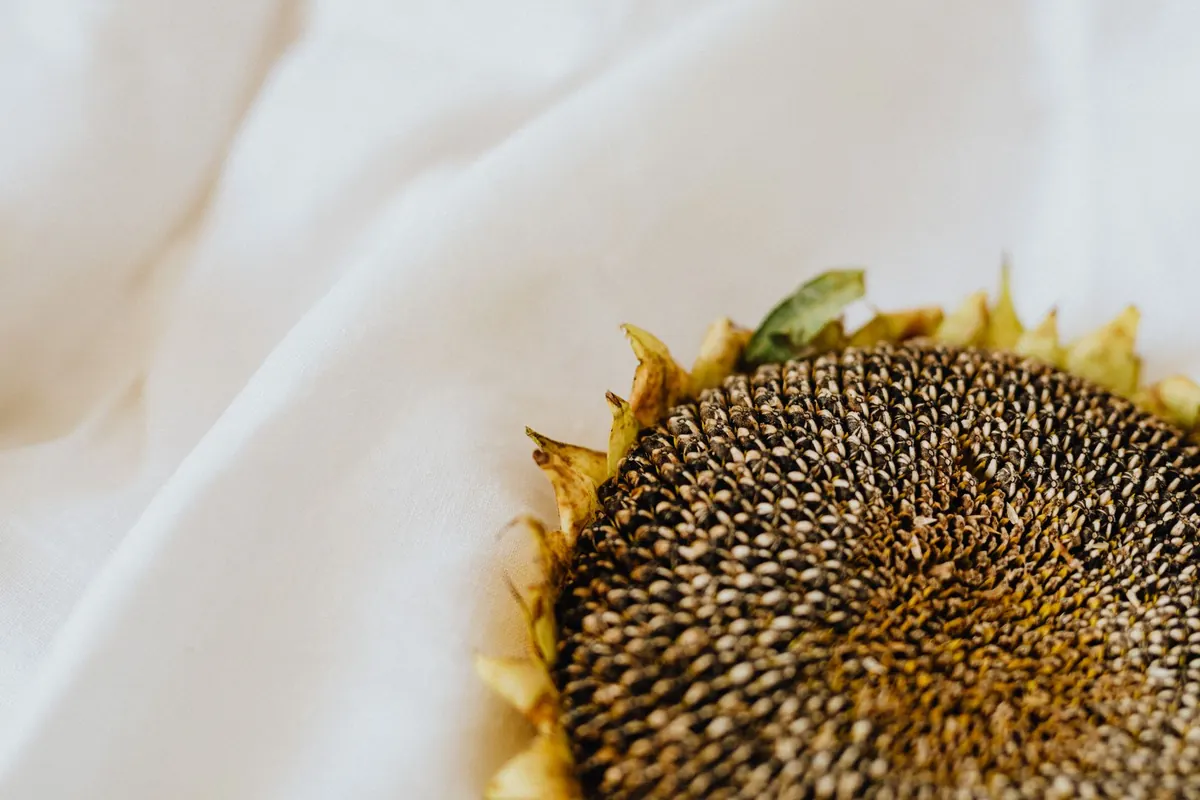
Sunflowers usually open from midsummer into early autumn, depending on sowing date and variety. Keep watering through flowering; dry soil at bloom time shortens the display. For cut flowers, harvest in the morning when petals are just opening. Deadhead spent flowers if you want more blooms from branching types, or leave heads on the plant for birds and seed saving.
Watch for aphids on stems and buds; a strong spray of water knocks them back, and ladybirds often arrive to help. Birds may start sampling seeds as heads ripen. If you want to save seed, tie a paper bag or fine net over the head once the petals fall, or cut the head when the back turns brown and dry it indoors in a warm, airy room. Keep the drying heads off damp surfaces so they do not mold.
A Short First-Year Check List
If you remember only a few things, make them these: give sunflowers full sun, do not start them too early indoors, space tall varieties generously, water deeply rather than often, and stake before you think you need to. Write down sowing dates and which varieties did well; a notebook is more useful than memory when you plan next year’s patch. Even a single row along a fence will teach you more than a perfect plan. Start with a manageable number, keep the seed packet, and adjust next season.
Photo: K / Pexels