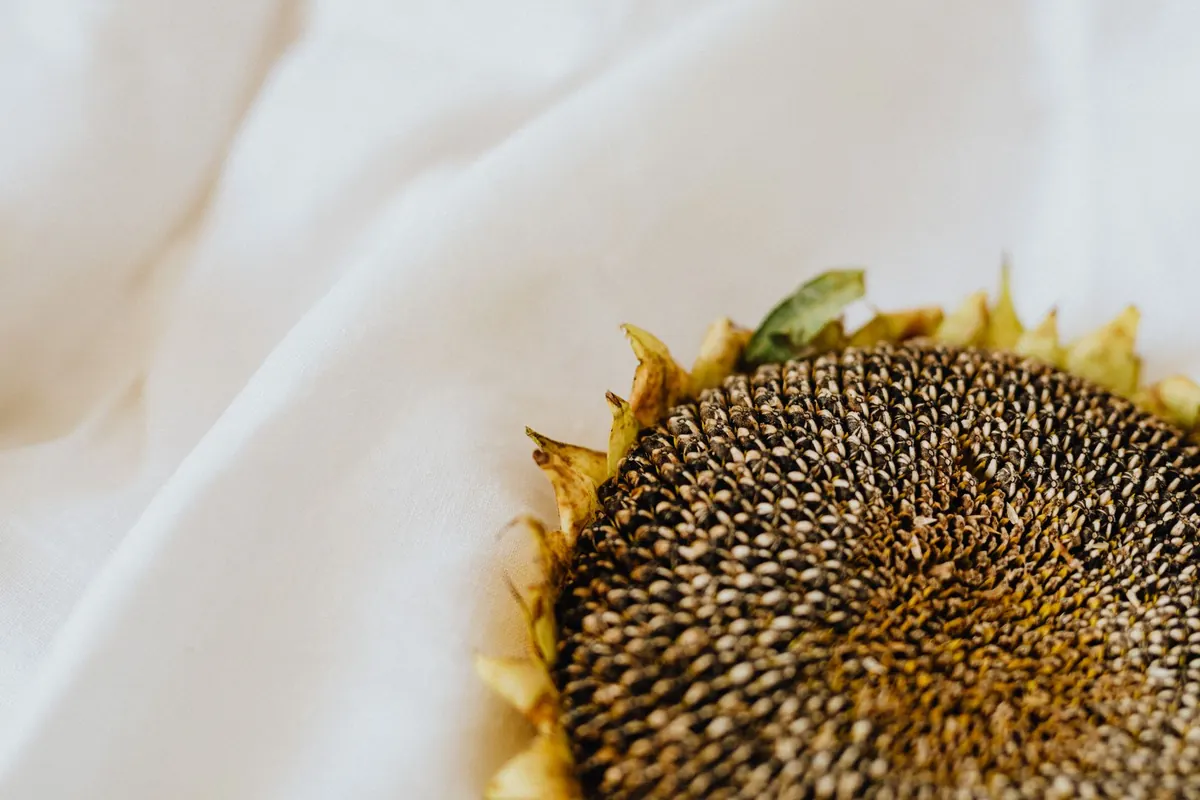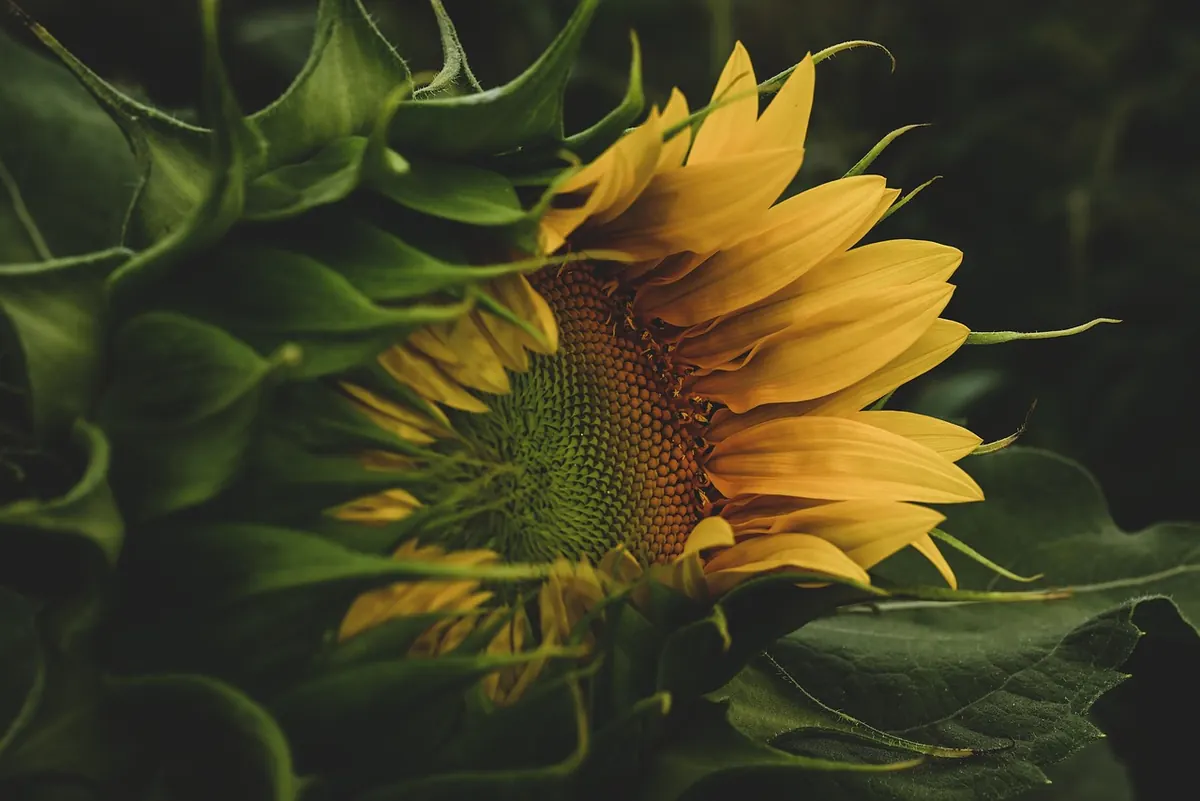
You walk out early with your coffee and the sunflower row that looked flawless on Sunday has gone pale at the ankles. The lowest leaves are the colour of weak tea, one or two with brown, crisp edges, while the tops are still reaching for the light as if nothing happened. Before you reach for the watering can or a bottle of feed, take a breath. Yellow leaves are a symptom with several possible authors, and the pattern of the yellowing — which leaves, which part of the leaf, how quickly it spread — usually tells you which one you are dealing with.
These are the seven causes we see most often, roughly in order of how frequently they turn up, along with what each one looks like and what actually helps.
1. Watering: Too Much, Too Little, or Just Right
Sunflowers have a reputation for drought toughness, and a mature plant with deep roots mostly earns it. Seedlings, fresh transplants and anything growing in a pot do not. Both extremes produce yellow leaves, so the job is telling them apart.
In wet soil, leaves yellow from the bottom up, feel soft and limp rather than crisp, and the plant may wilt at midday even though the ground is damp. Push a finger in and if it comes out muddy at five centimetres, stop watering. Sour-smelling soil, a green film of algae on the surface or fungus gnats hovering around the base are further clues. In dry soil the yellowing tends to start at the leaf edges and tips, which turn brown and papery, and the whole plant droops in the afternoon before perking up overnight.
- Water deeply and less often. A slow soak that reaches 15–20 cm down beats a daily sprinkle that only wets the surface.
- Aim for roughly 2.5 cm (an inch) a week, including rain, and more in sandy ground, during heatwaves, or in containers.
- Water at the base, in the morning. Damp foliage overnight is an open invitation to mildew.
- Mulch with straw or compost to hold moisture and keep the soil temperature steadier.
- Check pots daily in July and August. A sunflower in a container can dry out in a single hot afternoon.
If a plant is waterlogged, stop watering, ease the pot onto feet so it drains freely, and let the top few centimetres dry before the next drink. In heavy ground, work compost into the surrounding soil rather than digging right up against the roots.
2. Nutrients and Soil pH: When the Food Is There but Unreachable
A sunflower builds a thick stem and a heavy head in a single season, which takes real nutrition. If water is clearly not the problem, feeding is the next place to look — and the leaf pattern points to which nutrient is short.
Reading the pattern
- Nitrogen: the oldest, lowest leaves go pale first, the whole leaf yellowing evenly. Growth slows and stems look thin.
- Magnesium: older leaves turn yellow between the veins while the veins themselves stay green.
- Potassium: the edges and tips of older leaves yellow and scorch, as if singed.
- Iron: the newest leaves at the top yellow between green veins, and new growth comes out small.
For plants in beds, a spadeful of well-rotted manure or compost as a side dressing usually covers it. For containers, use a balanced liquid feed every two to three weeks through the growing season, because watering constantly leaches nutrients out of potting mix. Resist the urge to pile on nitrogen: you get soft, floppy growth, fewer flowers, and a plant that aphids find irresistible.
The pH question
Sunflowers are forgiving and grow across a wide range, but when soil drifts far outside roughly 6.0 to 7.5, some nutrients — iron, zinc and manganese among them — become hard for roots to take up even in rich ground. A cheap test kit settles the question in ten minutes. Acid soil can be sweetened with garden lime, applied modestly and ideally in autumn. Alkaline soil is slower to change; yearly compost and mulch do more good than any drastic correction, and it is never wise to shift pH sharply around growing plants. Cold spring soil can also lock things up temporarily, which is why seedlings sometimes yellow and then grow out of it once the ground warms.
3. Fungal Diseases That Begin as Yellow Patches
Yellowing that spreads, spots with halos, or fuzz on the underside of a leaf points to disease. Most of these start low on the plant and move upward, because splashing water and humid air reach the bottom leaves first.
Downy mildew shows as yellow patches on the upper surface with a greyish down underneath, and it thrives in cool, wet spells. Powdery mildew leaves a white dusting on top, usually on crowded plants in warm days and cool nights. Rust appears as small orange-brown pustules underneath, each ringed with yellow. Leaf spot diseases produce brown centres with yellow rims, again low down and after rain splashes. Verticillium wilt is the one to worry about: yellowing that runs up one side of the plant, wilting that never recovers, and brown streaking inside the stem. There is no cure for that one — lift and bin the plant, do not compost it, and avoid sunflowers and related crops such as Jerusalem artichokes in that spot for two or three seasons.
For the rest, the fixes are mostly cultural: give plants more room, water at the base in the morning, strip the lowest 20–30 cm of leaves so air moves under the canopy, and pick off affected leaves as soon as you see them, dropping them in the bin rather than the compost heap. Wipe your secateurs afterwards.
4. Pests Feeding on the Undersides
Turn a few leaves over before you assume disease. Aphids cluster on soft growing tips and undersides, and where they feed you get sticky honeydew, a sooty black film, curling leaves and yellow patches. Spider mites prefer hot, dry weather: fine pale stippling across the leaf, a dusty appearance, and faint webbing where the leaf meets the stem. Thrips, whiteflies and leafhoppers all leave similar speckling and yellowing in their wake.
A firm jet of water every few days knocks aphids back surprisingly well. Plant dill, fennel or calendula nearby to bring in ladybirds, lacewings and hoverflies, which do the work for you. Insecticidal soap helps with heavy infestations — spray in the evening, test it on one leaf first, and never spray open flowers, because bees are the whole point of the crop. For spider mites, the best defence is a well-watered plant; dry, stressed sunflowers lose the battle quickly.
5. Heat, Sun and Root Stress
Sunflowers want full sun, but everything else about them prefers a settled life. Newly planted seedlings often sulk for a week or two, yellowing their lower leaves before settling in and pushing new growth — that is transplant shock, and it needs patience rather than products. In a heatwave above roughly 35°C, with dry soil, the top leaves wilt and margins scorch. Pots standing against a hot wall cook their own roots, which shows up as general yellowing and stalling. Hoeing too close to the stem damages surface roots and produces the same effect. If yellowing and distorted, cupped new growth appear suddenly after a neighbour sprayed a field, herbicide drift is a fair suspicion; affected plants often grow out of it.
Shade cloth for a week after planting out, a deep watering the evening before
Photo: akirEVarga / Pixabay